From Prototype to Series: How to Outsource a Welded Steel Assembly
A welded part costs most when it is built once. The price per piece falls with three things: a welding jig, a repeatable process and a batch size that spreads the set-up. This guide explains when each of them pays off, what to agree for a first article, and how to set up call-off orders for 50 to 5,000 pieces a year.
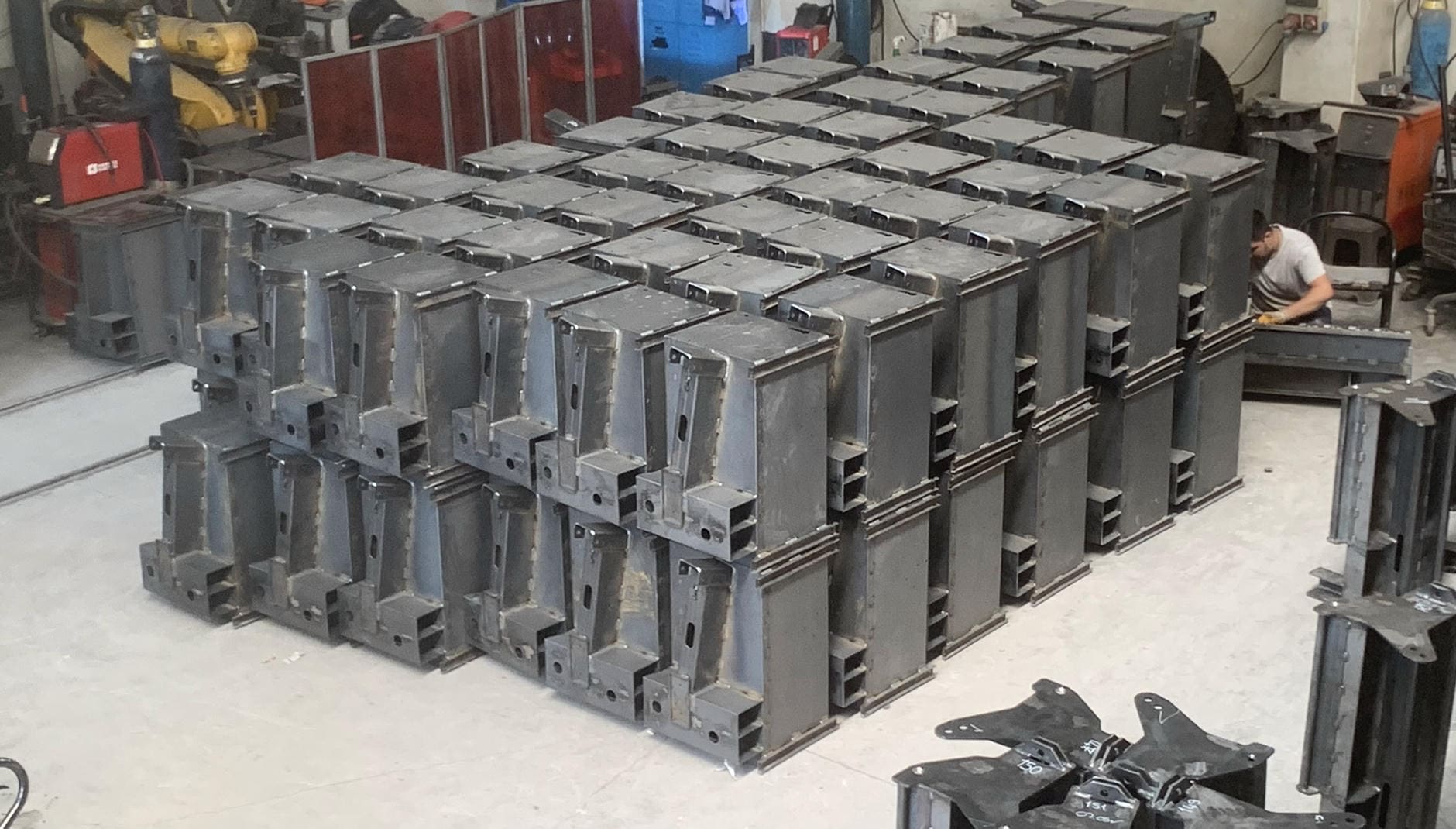
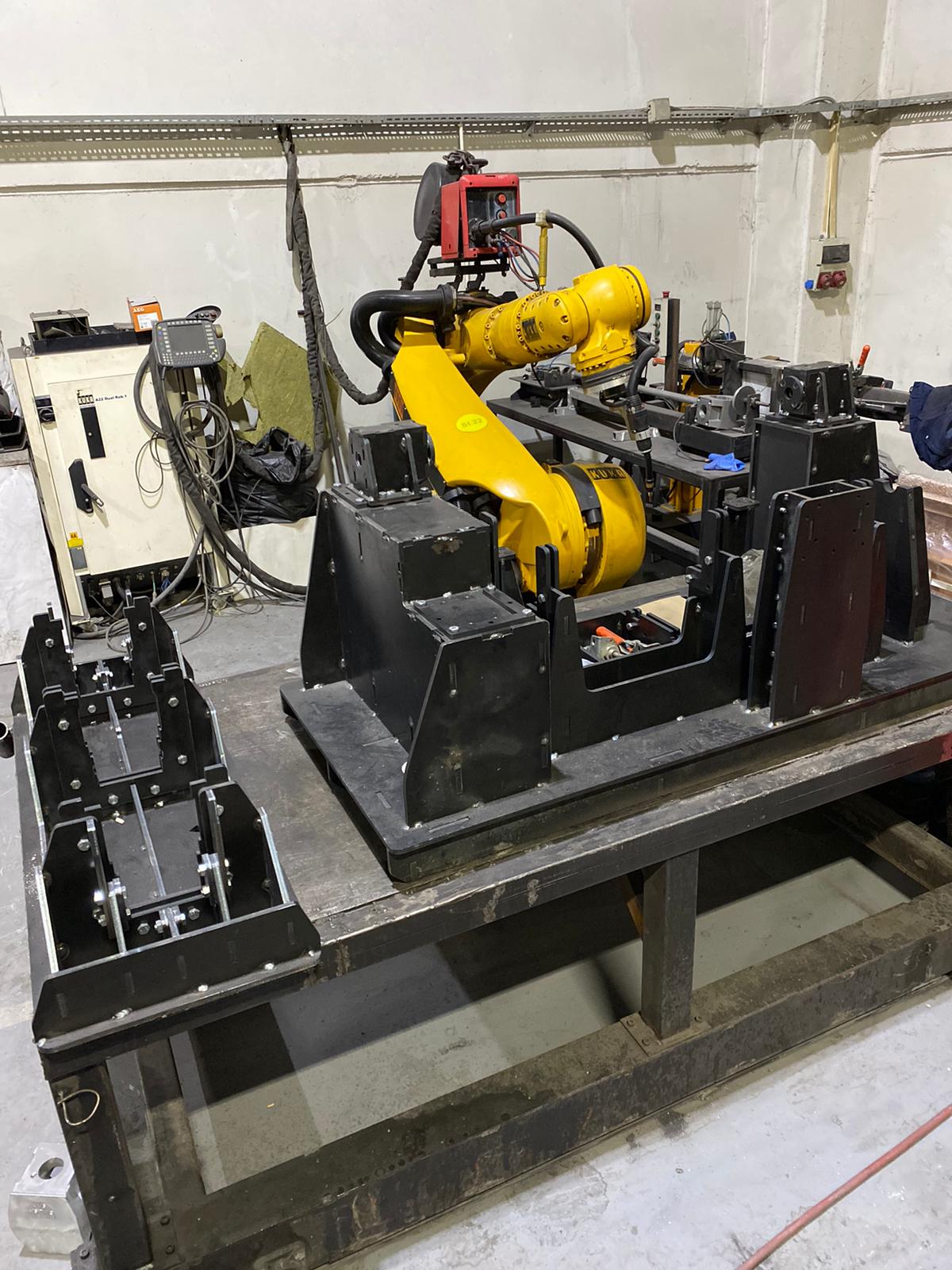
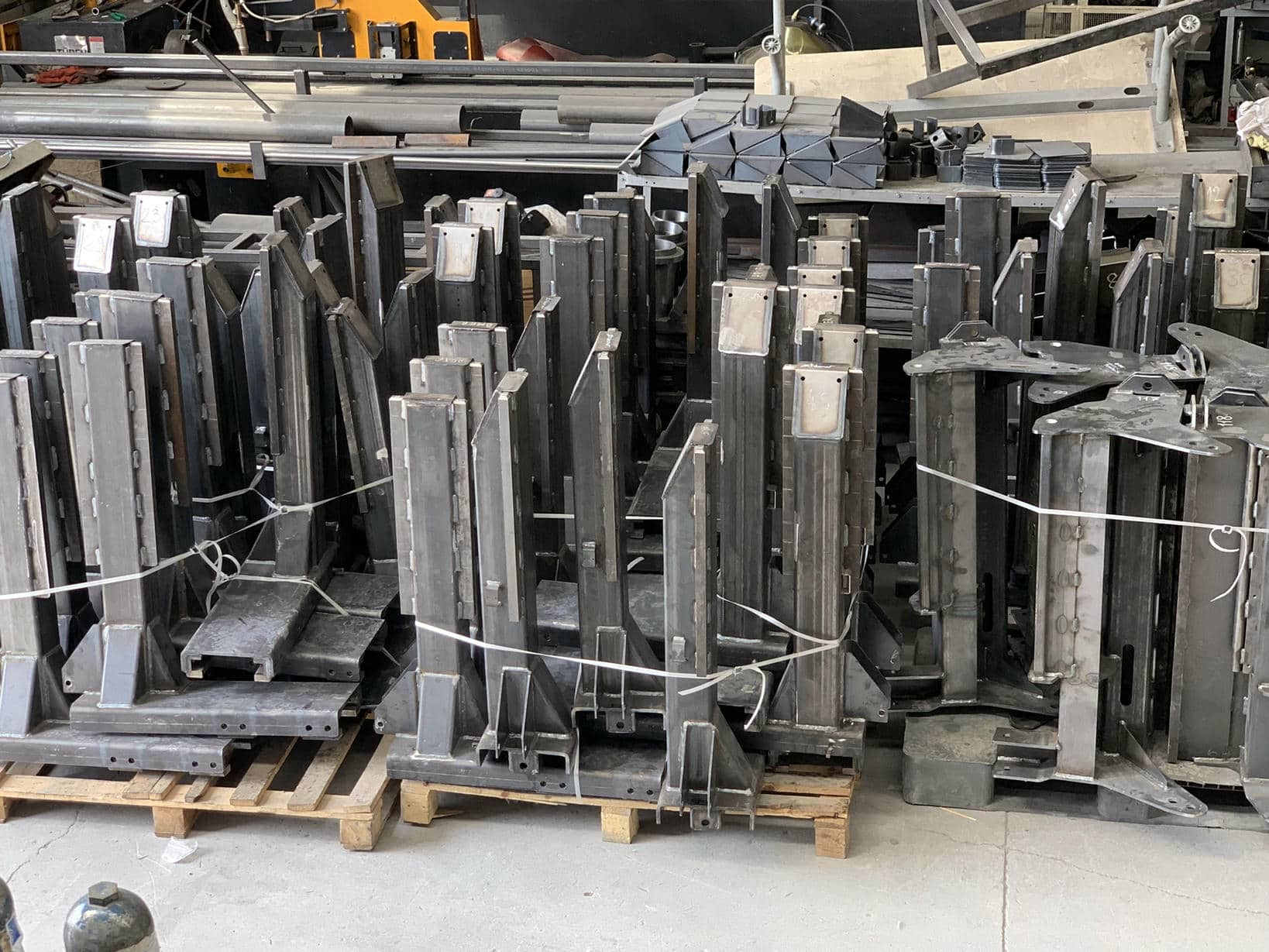
- 1 → 5,000Pieces a year
- JigRepeatable geometry
- RobotRepeat welds
- FAIFirst article
- Call-offFrame orders
What Makes a Welded Part Cheaper in Series
In a one-off welded part, a large share of the price is not welding at all. It is reading the drawing, programming the laser, setting up the press brake, tacking parts together by hand and measuring as you go. In a series, these costs are paid once and divided over the batch.
Three steps change the price per piece the most:
- A welding jig. Parts are clamped in a fixed position, so fitting is fast and every piece has the same geometry.
- A frozen process. Cutting programs, bending sequences and welding procedures are kept per part number and reused.
- Batch size. Set-up time is spread over more pieces, and material can be bought in better lengths and quantities.
Robot welding comes on top when the same welds repeat often enough to justify programming.
Batch Size and How the Part Is Made
| Pieces per year | Typical way of working | What you pay for |
|---|---|---|
| 1–5 (prototype) | Hand fitting and welding, measured as built | Engineering and set-up dominate the price |
| 10–50 (pilot batch) | Simple jig, process written down | Jig cost, first article inspection |
| 50–500 | Jig per part, batches on call-off | Mainly material, welding hours and coating |
| 500–5,000 | Robot welding for repeat seams, dedicated jigs | Material and machine time; lowest price per piece |
Orientation only. The right point depends on part size, number of welds and tolerances.
How a Product Moves from Prototype to Series
Prototype
Built to drawing to test function. Expect a high price per piece and design changes.
Design for manufacture
Joints, weld sizes, tolerances and coating details are reviewed to cut welding and machining time.
Pilot batch
A first batch on the intended process, often 10 to 50 pieces, with a simple jig.
First article inspection
One part is measured against every dimension on the drawing and approved in writing.
Series release
Drawing revision, process and price are frozen for the series.
Call-off orders
A yearly quantity is agreed and delivered in batches, so you hold less stock.
What to Agree Before the Series Starts
Jig and tooling
Ask whether the jig is quoted separately or spread over the series price. A separate charge makes the first order expensive; spreading it is simpler if the volume is reasonably sure. Agree who owns the jig.
First article inspection
Agree which dimensions are measured and how the report looks. A first article report against the drawing, plus material certificates to EN 10204 3.1, is a good standard for welded parts.
Drawing revisions
A series runs on one drawing revision. Changes after release should go through a short change process, because they can affect the jig and the price.
Frame orders and call-offs
A yearly frame order with call-offs lets the supplier buy material and plan capacity, and gives you a better price without paying for stock. Agree the call-off lead time, for example two to three weeks for repeat batches.
Coating and packing
Specify galvanizing or the paint system, and how parts are packed per batch. Good packing saves freight; see corrosion protection and designing for galvanizing.
Frequently Asked Questions
When does a welding jig pay off?
Usually from the pilot batch onward. If you expect more than about 10 to 20 identical pieces, a simple jig often costs less than the extra fitting time without it.
When is robot welding worth it?
When the same seams repeat in batches of roughly 50 pieces or more and the parts fit accurately enough for the robot. For small batches, a skilled welder in a jig is usually cheaper.
How long does a pilot batch take?
Typically 4 to 6 weeks from approved drawing, depending on material, coating and jig complexity.
Should I order the prototype from the series supplier?
It helps. The supplier learns the part early and can suggest changes that lower the series price before the design is frozen.
What is a first article inspection?
A complete measurement of one part from the new process against the drawing, documented and approved before the series is released.
Small Series at Nika Steelworks
Most of our work is welded parts in batches of tens to thousands for equipment makers in Europe: frames, structures, brackets and housings. We build jigs per part number, use a KUKA welding robot for repeat seams and keep the process per part so repeat orders come out the same. See our serial fabrication, the RFQ checklist, and the industries we work for, such as recycling and street furniture and modular construction.
Have a part that is ready for a series?
Send the drawing with your expected yearly volume. We tell you how we would build it and what it costs per piece.