Solar Tracker Steel Components Manufactured in Türkiye
Welded and galvanized steel parts for single-axis trackers, ground-mount racking and PV balance of system. Built to your drawing or profile list for tracker OEMs, EPC contractors and mounting system manufacturers across Europe.
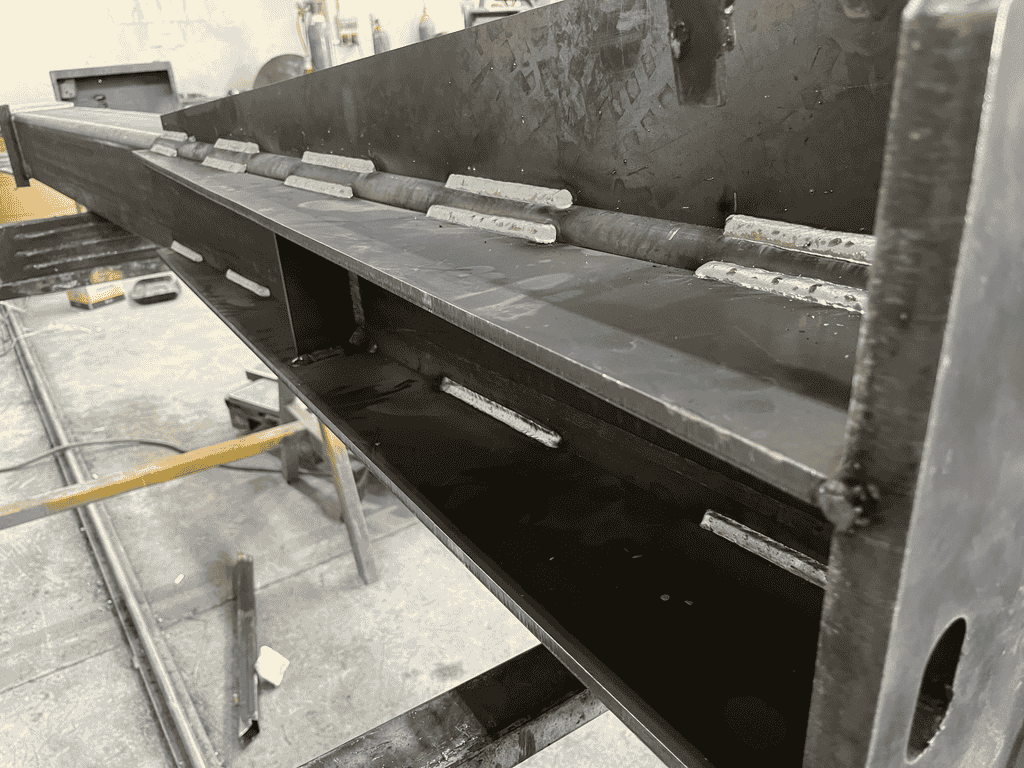
A Fabrication Partner for Utility-Scale PV Hardware
Tracker programmes are won on repeatability. Every bearing plate, bracket and post has to match the last thousand, because installers on site have no time to open up a hole or straighten a leg.
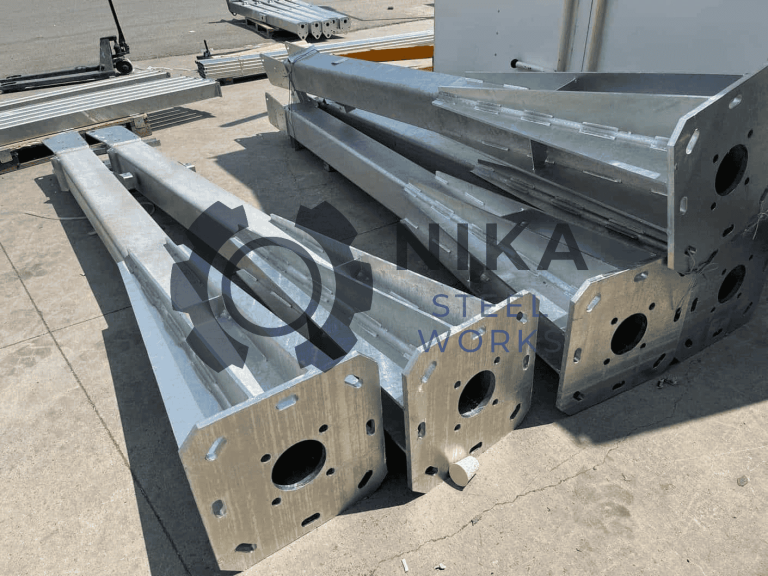
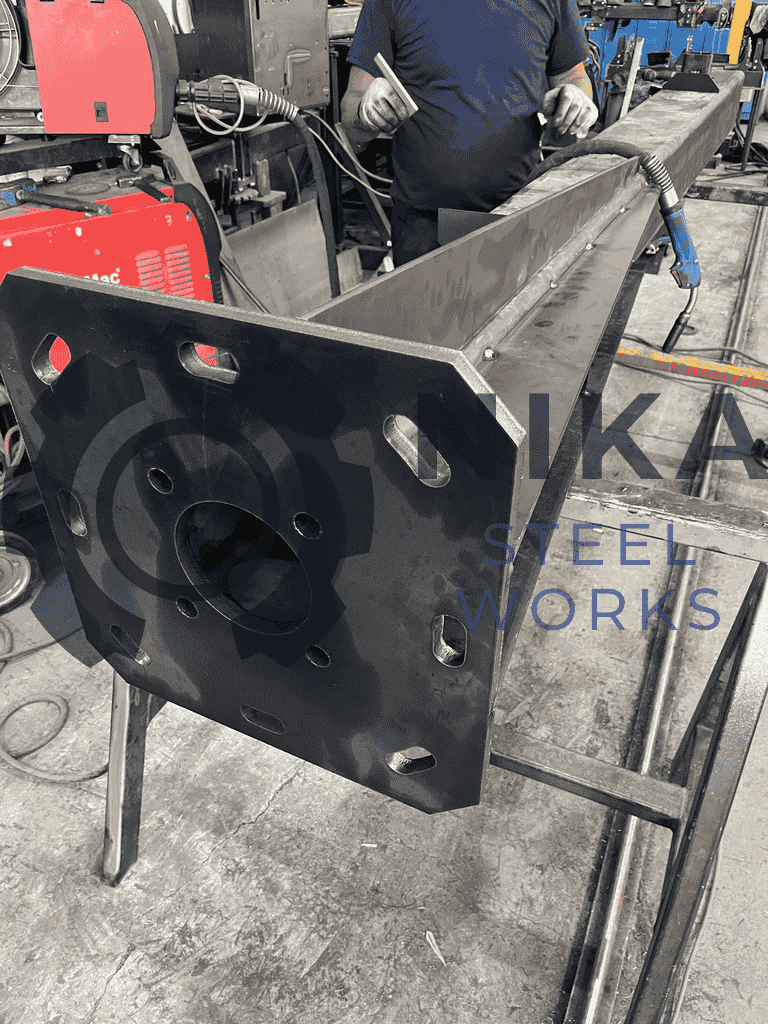
We fabricate that hardware in İzmir from your PDF, STEP or DXF files: plate and tube are cut, formed and welded in fixtures, hole patterns are verified against the drawing, and finished parts are sent for hot-dip galvanizing before they are inspected and packed for the project site.
The scope suits tracker manufacturers who want a second source close to European projects, EPC contractors procuring structural kits against a bill of materials, and developers who need a custom part their standard supplier does not stock. Prototype frames and pre-series batches come first; once the drawing is frozen, the same part moves into repeat call-off.
Related capability: serial welded and machined components, custom steel auger screws and welding and steel fabrication.
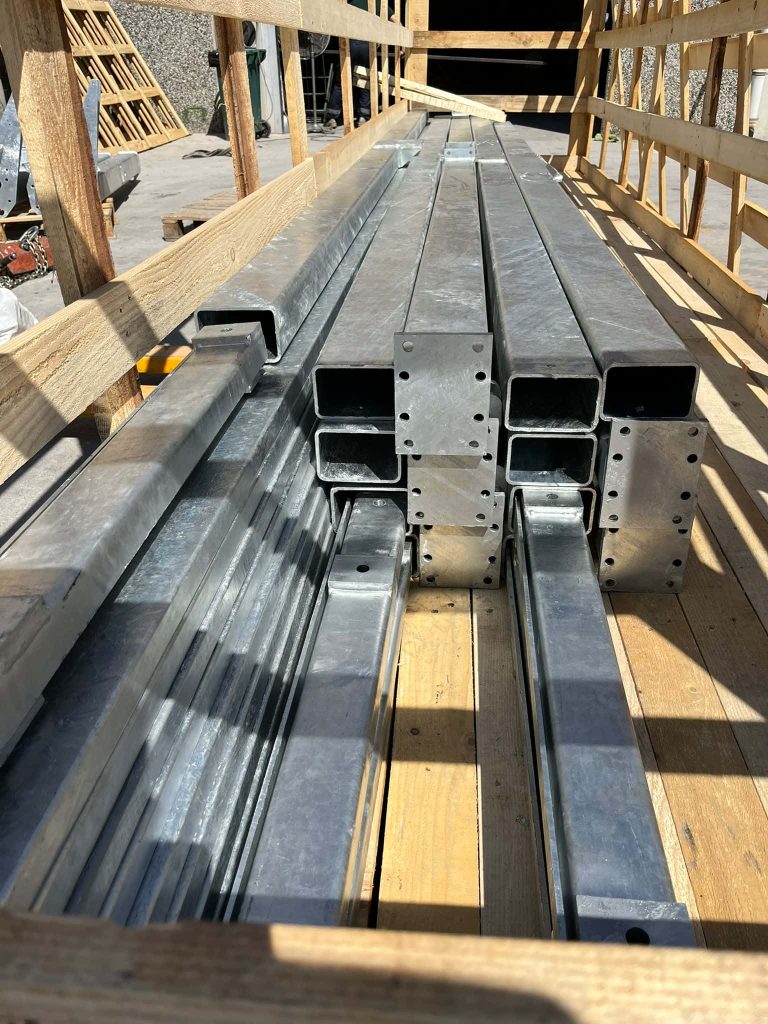
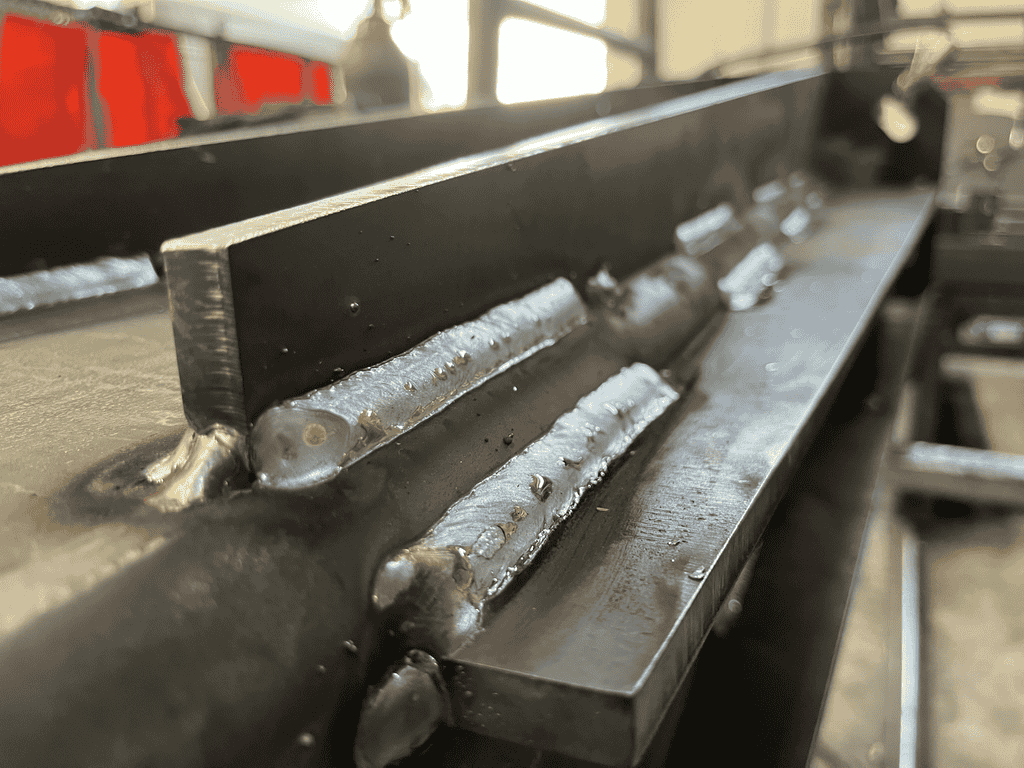
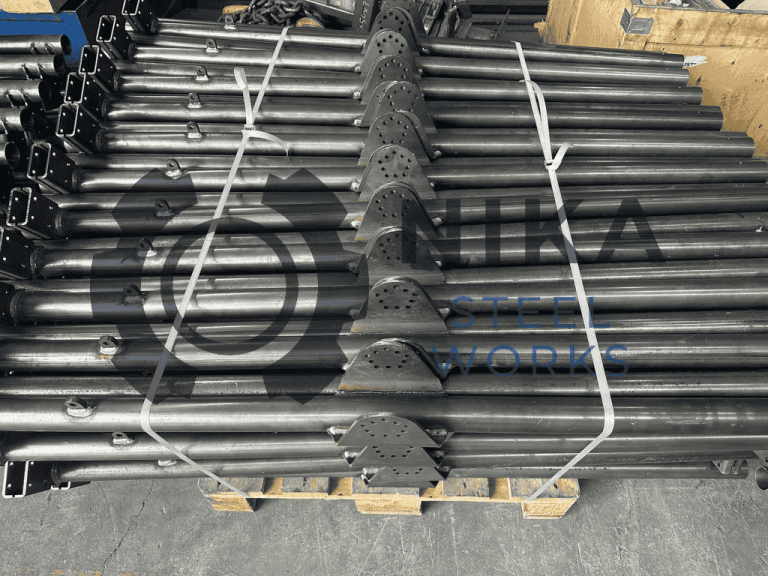
Galvanized for a 25-Year-Plus Service Life in the Field
Solar arrays sit outdoors for decades, often near coasts, farmland or desert soil. Zinc is the standard answer, and it works best when the part was designed to be dipped.
Hot-dip galvanizing to EN ISO 1461 follows fabrication, and the galvanized parts are inspected and packed for site. Because we weld with the dip in mind, vent and drain holes, weld seams and stacking points are planned at the fit-up stage, which avoids the distortion and trapped-zinc problems that show up when galvanizing is treated as an afterthought.
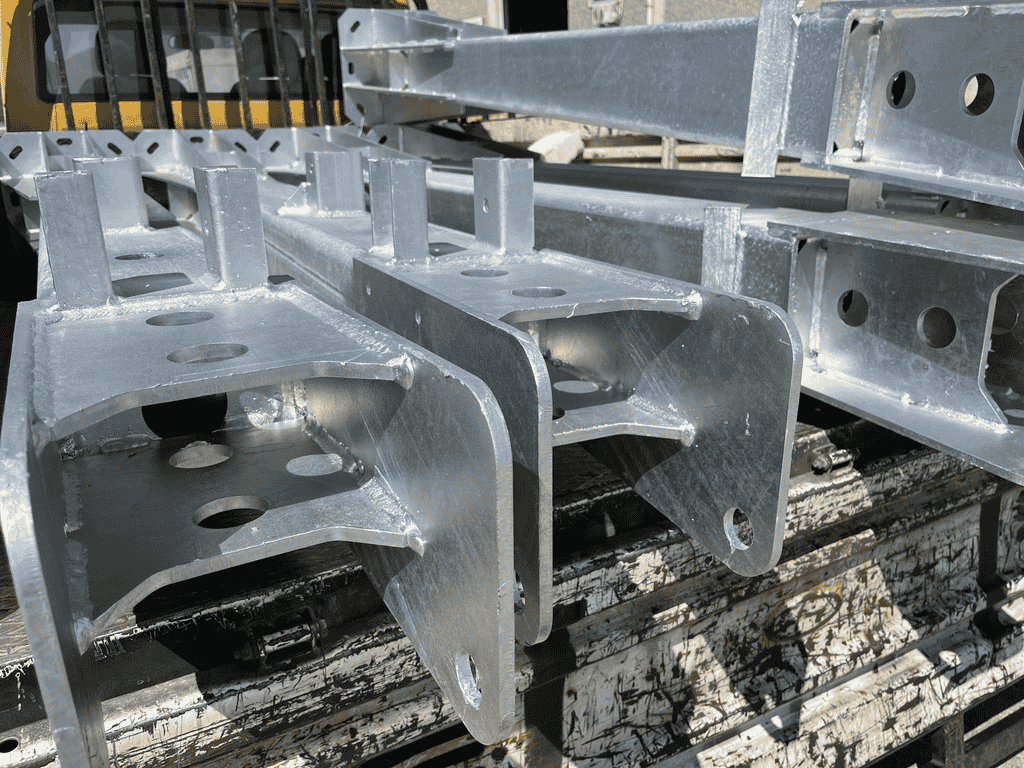
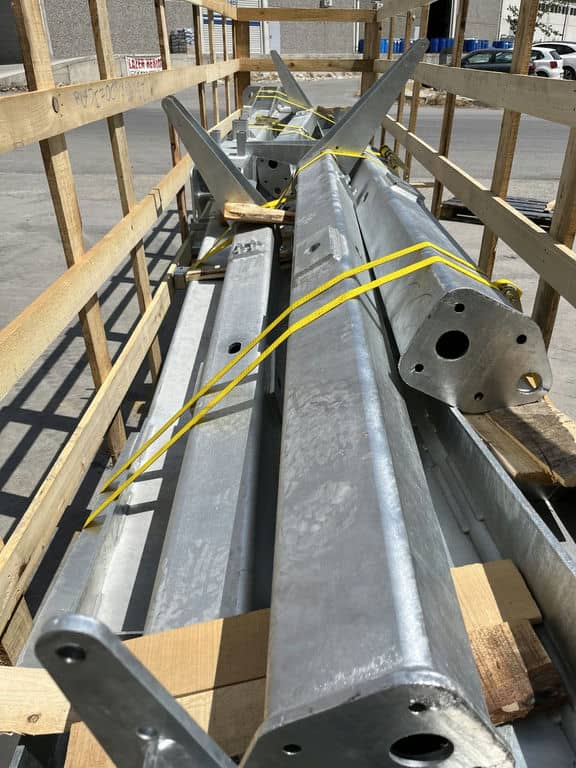
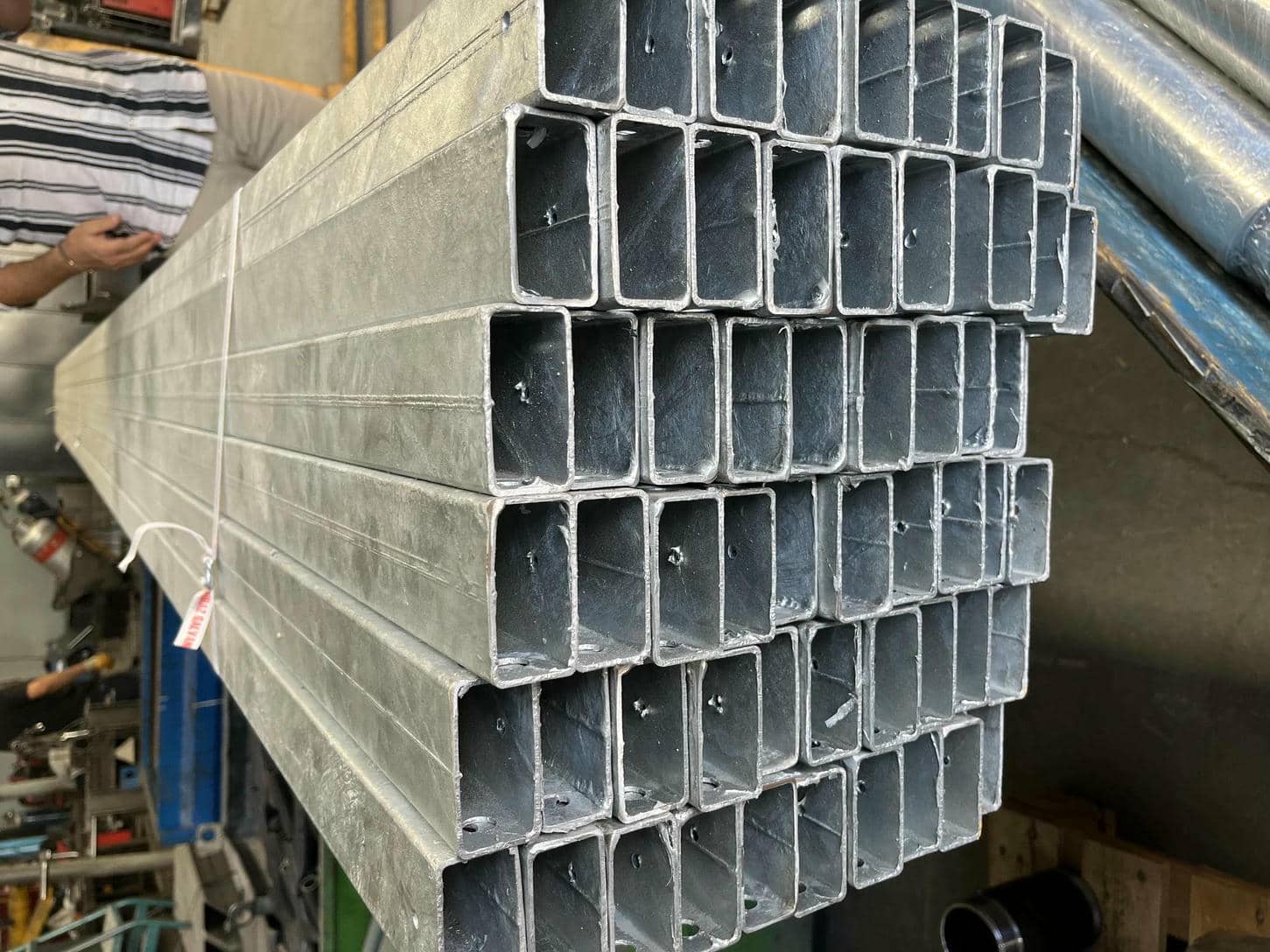
- EN ISO 1461 coating requirements where the specification calls for it
- Dip pool parts up to 12,000 mm long × 5,000 mm wide × 5,000 mm deep, any order weight
- Duplex systems (zinc plus paint or powder coat) coordinated on request
- Sandblasting and weld grinding in preparation for coated finishes, see sandblasting and paint
More on the process: galvanizing and protective coatings.
What We Fabricate for Trackers and Racking
Typical scope, always made to the customer drawing or profile list. If a part is not listed, send it: most welded plate and tube work in this sector sits inside our process range.
Torque Tube Brackets, End Plates and Couplers
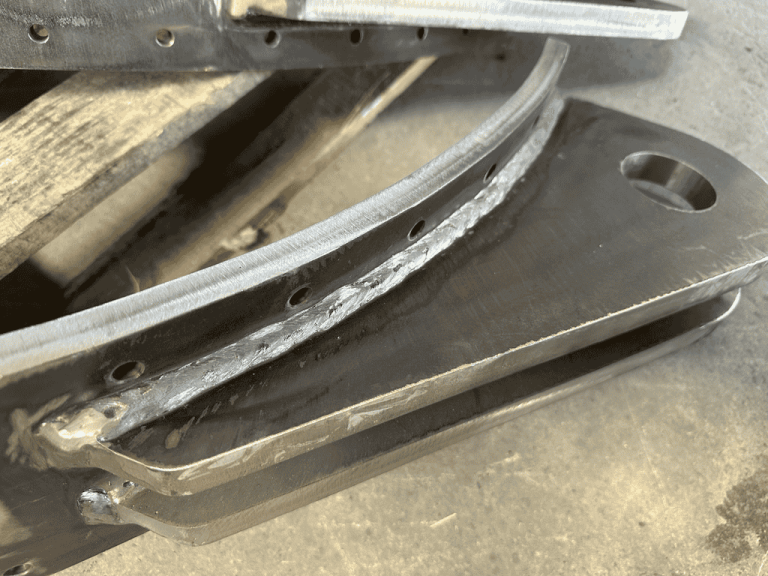
Plate and tube sub-assemblies that connect the drive line: cut on the tube laser, with bevels where a weld prep is specified, then welded in fixtures so the bolt circle stays true.
Bearing Housing Plates and Support Assemblies
Formed and welded housings that carry the torque tube on the foundation. Slot and hole positions are checked on gauges rather than by eye.
Pile Caps, Truss Caps and Adapter Plates
Heavy-section plate parts that join driven piles or truss legs to the tracker interface, cut from plate up to 180 mm and welded to your procedure.
Motor Mounts, Drive Brackets and Gearbox Supports
The most loaded fabrication on any row. Machined faces and bores can be finished after welding where the drawing asks for a fit.
Posts, Uprights, Purlins and Module Rail Supports
Cold-formed and plate-based sections, drilled on the beam line, cut to length and stacked in numbered bundles for the installer.
Fixed-Tilt Frames, Equipment Skids and Cable Supports
Ground-mount racking frames, inverter and equipment skids, platforms and enclosures, with galvanized or painted finishes to the project specification.
From Frozen Drawing to a Repeatable Series
A tracker part is only cheap if it is made the same way every time. The route below is set at the first prototype and then locked.
Drawing and DFM review
We read weld access, hole tolerance, galvanizing vent and drain points and the stock left for machining before any steel is cut.
Cutting and forming
Fiber laser, tube laser and plasma blanks go to the CNC press brake or to rolling, with a beam line handling drilled sections.
Fixture welding
MIG/MAG and TIG in dedicated fixtures, with WPS/PQR documentation available on request, so the hundredth part matches the first.
Finish, inspect, pack
Hot-dip galvanizing, dimensional and visual checks, then crating or bundling for road or container.
Paperwork That Passes Your Incoming Inspection
Lenders, independent engineers and EPC quality teams ask for evidence, not assurances. Reports and certificates travel with the crate or are issued ahead of dispatch.
- EN 1090 and EN ISO 3834 certified quality system, with EN ISO 14731 welding coordination and WPS/PQR available per project
- EN 10204 3.1 mill certificates with heat numbers kept readable through cutting and welding; 3.2 arranged when a witness is required
- Weld inspection by visual and dimensional checks, with PT and MT testing and UT coordinated when the specification asks for it
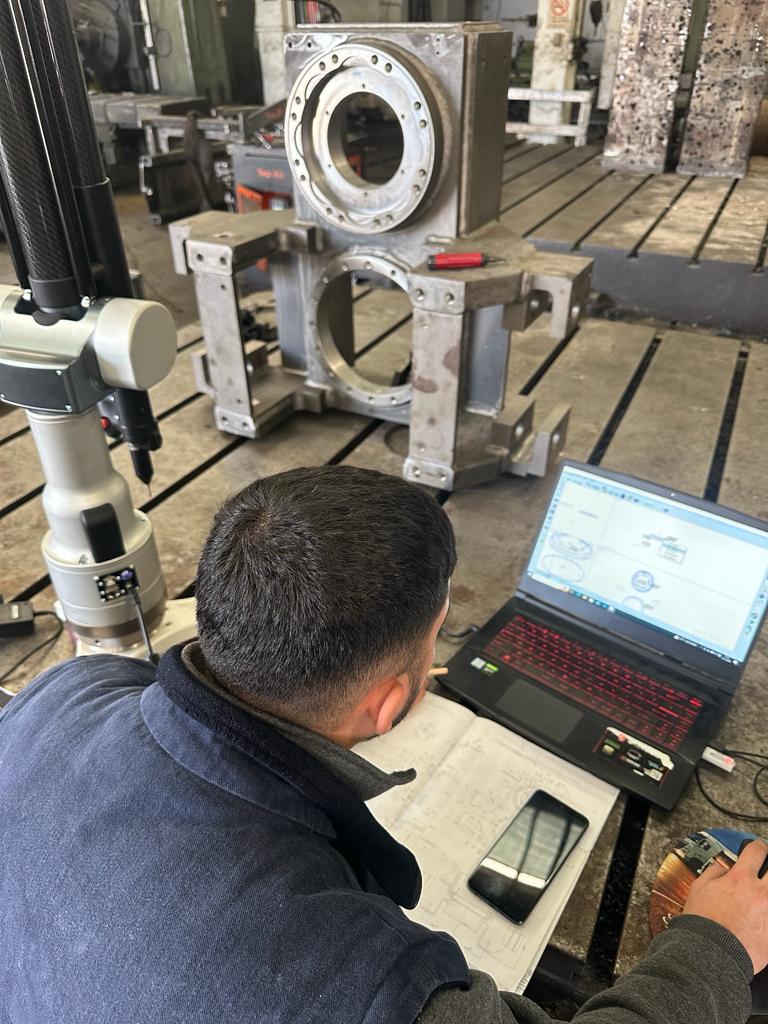
- Dimensional control with gauges, height gauges and CMM measurement where the tolerance band demands it
- Third-party attendance by your inspector, a notified body or an appointed agency, with hold points planned before welding starts
Full detail on the quality and inspection page.
Supply Models for Different Buyers
The part is the same; the commercial setup is not. We adapt lot sizes, kitting and documentation to how your project is procured.
Tracker manufacturers
Second-source or overflow capacity near European projects, with frozen drawings and call-off releases against a forecast.
EPC contractors
Structural kits and special brackets priced against a bill of materials, packed in installation order for the site team.
Mounting system makers
Fixed-tilt, carport and rooftop-adjacent steelwork, including parts that fall outside your standard catalogue.
Developers and IPPs
Custom foundations adapters, retrofit brackets and replacement parts for plants already in operation.
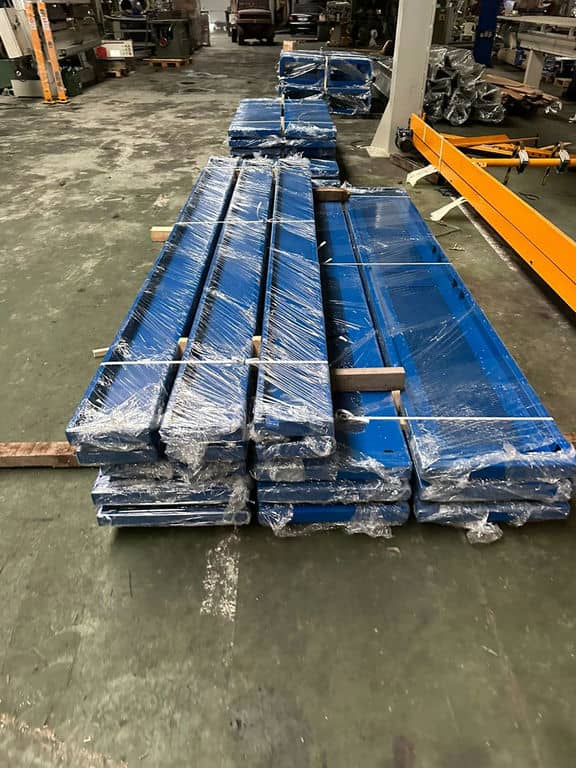
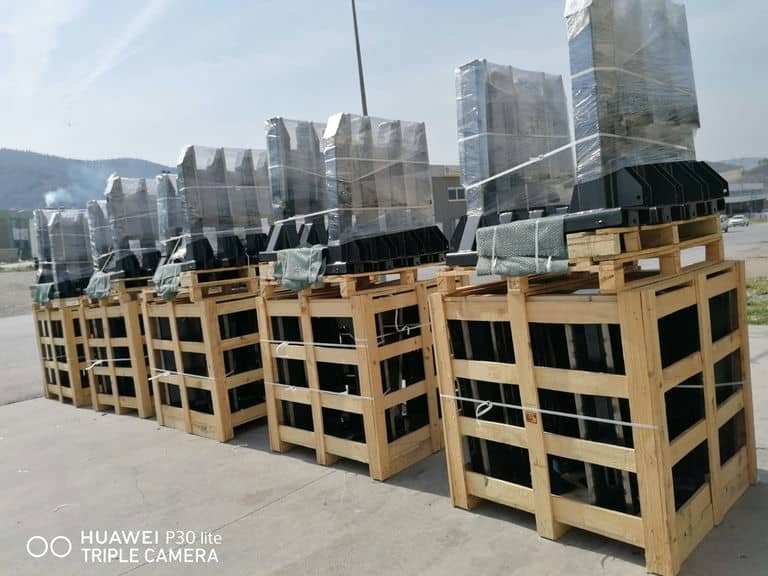
Packed for the Site, Not Just for the Truck
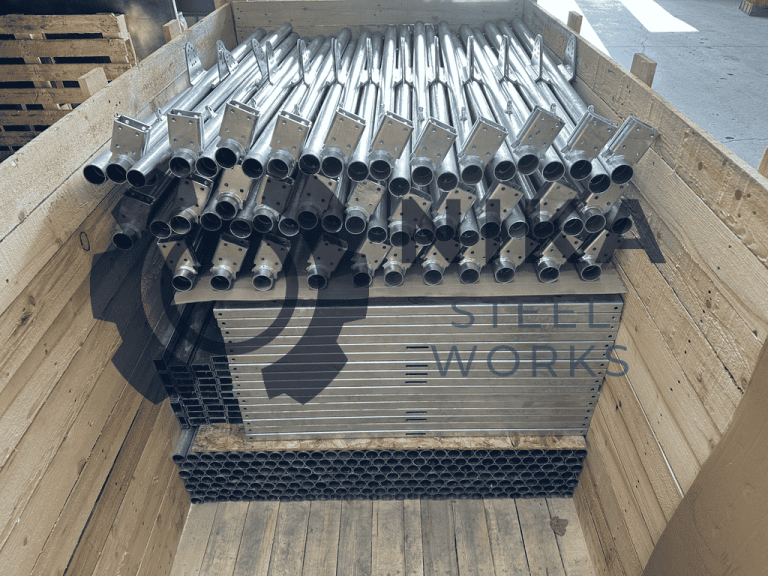
Galvanized surfaces are easily marked by careless stacking, and a mixed pallet costs an installer an afternoon. Parts are bundled, separated and labelled by part number and row or block reference where you give us one.
Shipments leave İzmir by road freight within Europe or by container, on EXW, FOB, DAP or DDP terms agreed on the quotation. Documentation is packed with the crate or sent ahead so goods can be received against a clear report pack.
Browse related manufactured projects or see the machine park behind them.
Request a Quotation for Your Tracker or Racking Parts
Send the files and we come back with feasibility, lead time and a price, flagging any change that would make the part easier to weld, galvanize or repeat.
Send a drawing- Drawing as PDF, STEP, DXF or DWG
- Steel grade and plate or tube thickness
- Quantity per release and expected annual volume
- Coating requirement and standard
- Documents such as 3.1 or 3.2, NDT scope, ITP
- Destination country and preferred delivery terms
Sourcing Solar Tracker Steel Components from a Turkish Manufacturer
Single-axis trackers look simple from the road: a long tube, a row of posts and a motor. Behind that picture sits a long list of fabricated parts, each with its own load path, tolerance and coating requirement. Wind is the governing load on most sites, so the connections between pile, bearing and torque tube matter far more than the dead weight of the modules. Fabrication quality at those connections decides whether a row tracks smoothly for the life of the plant.
Why European buyers look to Türkiye for solar steel
Tracker demand in Europe is concentrated around Spain, Italy, Germany and France, and the steel supply chain behind it is stretched. Türkiye offers a road-freight distance to southern and central Europe measured in days, a mature structural steel industry and welders trained to European standards. For buyers who want to diversify away from long sea routes, a nearshore subcontractor in İzmir shortens lead time and lowers inventory risk without changing the build-to-print model.
Parts that carry the load
Most of the value in a tracker sits in a few categories of welded and cut steel:
- Connection plates and bearing housings that hold the torque tube on the foundation
- Pile caps, truss caps and adapter plates, where heavy plate and weld quality govern performance
- Drive brackets and gearbox supports, which take the highest cyclic loads in the row
- Posts, purlins and rail supports, produced in large numbers and judged on repeatability
- Fixed-tilt racking frames, equipment skids and cable supports for the rest of the plant
We cut, form and weld these from carbon and structural steel on laser and plasma cutting lines and press brake and rolling equipment, with CNC machining for faces and bores that have to fit after welding.
Designing for galvanizing and for the installer
Two details separate a part that installs cleanly from one that generates site queries. The first is galvanizing: vent and drain holes must be sized and placed so molten zinc can enter and leave, and weld seams must be continuous where a trapped acid pocket would otherwise bleed through the coating. The second is the installer's view of the part, meaning hole patterns that repeat, bundles that open in the order needed and labels that match the construction drawings. Raising both at the drawing review stage costs nothing; raising them after the first shipment costs a project week.
Documentation for lenders and independent engineers
Utility-scale projects are financed, which means the steel is audited. Our welding and fabrication is organized under EN 1090 and EN ISO 3834, with WPS/PQR, EN 10204 3.1 certificates and heat-number traceability available per project. Where an owner's engineer or notified body wants to witness testing, we plan hold points before welding starts so the inspection does not delay the schedule.
How to start
The quickest route is a drawing and a quantity. Include the steel grade, the coating specification and the destination, and say whether the part is a prototype, a pre-series batch or a repeat order. We review weld access, galvanizing geometry and machining stock, then reply with a price and lead time. You can send a drawing through the contact page, or look at all manufacturing services first to see how the processes fit together.