Designing Welded Steel Parts for Hot-Dip Galvanizing
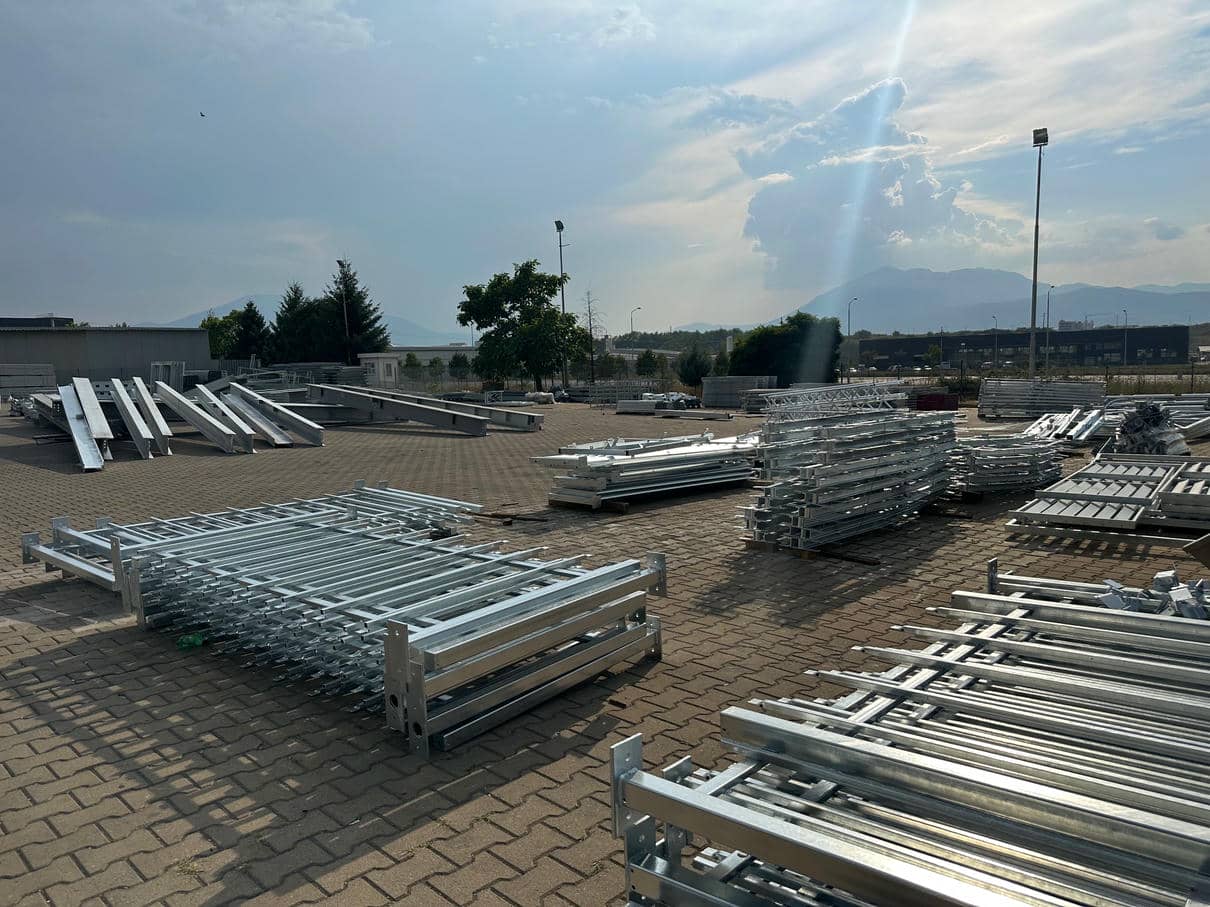
Hot-dip galvanizing protects steel for decades, but only if the part is designed for the zinc bath. Molten zinc at about 450 °C has to flow into every closed section and drain out again, trapped air and pickling acid have to escape, and thin parts must not distort. These are the design rules from EN ISO 14713-2 that matter most for welded frames and structures.
- ≈450 °CZinc bath
- EN ISO 1461Coating standard
- EN ISO 14713-2Design rules
- Vent + drainEvery closed section
- DuplexZinc + paint
What Happens to a Part in the Zinc Bath
Before galvanizing, the part is degreased, pickled in acid and fluxed, then dipped in molten zinc. Each step is a liquid that has to reach every surface and drain away. Air trapped in a closed tube expands in the hot zinc and can burst the section; acid trapped between two plates bleeds out later as rust streaks; and a part with thin and thick sections next to each other heats unevenly and distorts.
Nearly all of these problems are decided on the drawing. A few holes and a symmetric design cost almost nothing to add, while a scrapped batch costs the full price twice.
Six Design Rules for Galvanized Weldments
Vent and drain every closed section
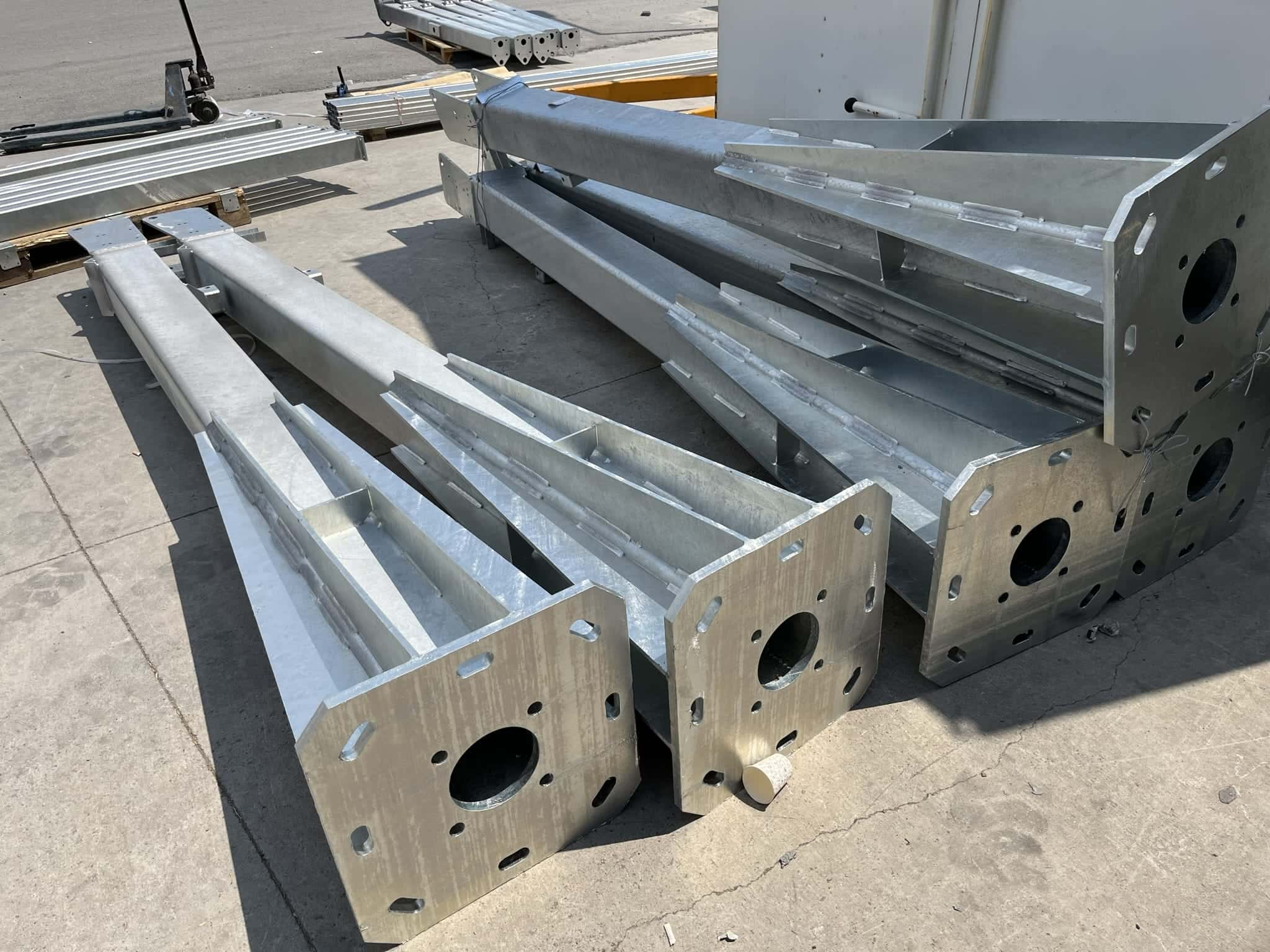
Tubes and box sections need a hole at each end, diagonally opposite and as close to the corners as possible, so air escapes and zinc drains.
Size the holes generously
Small holes slow drainage and leave lumps. As orientation, use at least 10 mm, and larger holes for larger sections; your galvanizer can confirm the size.
Avoid trapped overlaps
Plates welded flat on plates trap acid. Seal-weld small overlaps all round; give large overlaps a vent hole or avoid them.
Keep it symmetric
Similar thicknesses and symmetric welds limit distortion. Thin sheet on a heavy frame is the classic distortion risk.
Plan threads and fits
Zinc fills threads and bores. Tap internal threads after galvanizing, use oversize nuts, or mask fits and machine them afterwards.
Check the bath size
The part must fit the zinc kettle. Very long parts can be double-dipped, but it is better to know the limit before designing.
Minimum Mean Zinc Coating Thickness
| Steel thickness | Minimum mean coating thickness |
|---|---|
| over 6 mm | 85 µm |
| over 3 mm to 6 mm | 70 µm |
| 1.5 mm to 3 mm | 55 µm |
| under 1.5 mm | 45 µm |
Values for parts that are not centrifuged, as orientation. Check the standard for local values and centrifuged parts.
Steel Chemistry, Welds and Finish
Silicon and phosphorus in the steel
The silicon and phosphorus content of the steel changes how fast the zinc grows. Steels with silicon in the "reactive" ranges can give thick, grey and brittle coatings. If the appearance matters, state that the steel must be suitable for galvanizing, for example silicon below 0.03 % or between about 0.14 % and 0.25 %, and use the same steel grade within one product.
Welds and weld spatter
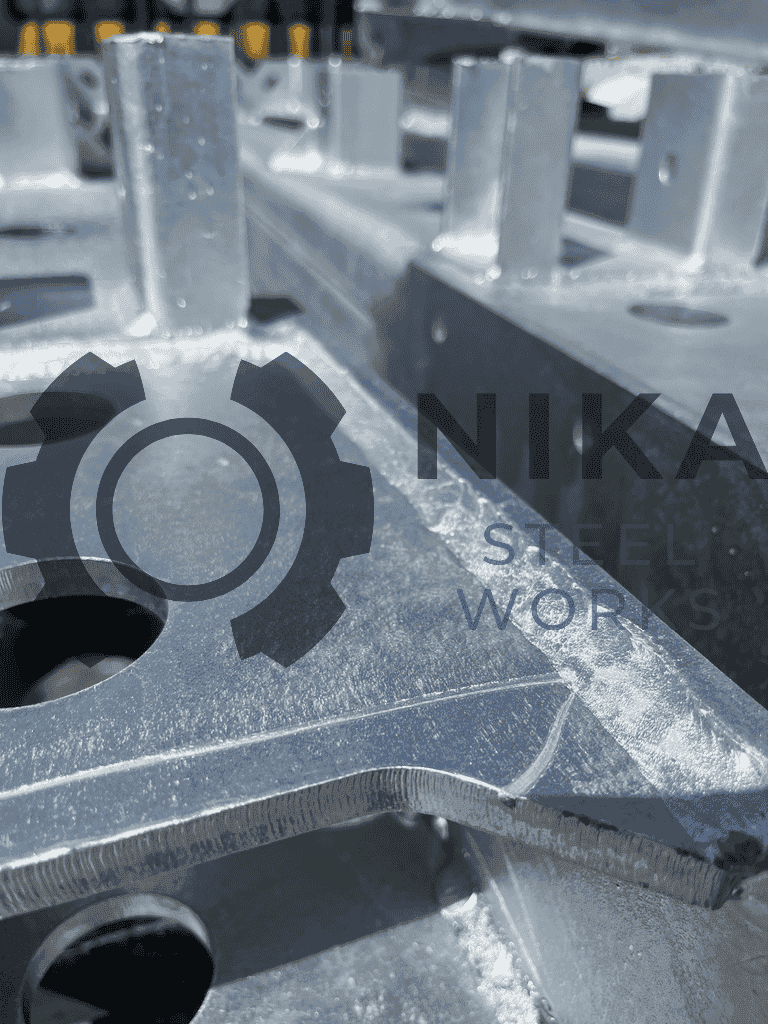
Weld slag and anti-spatter sprays are not removed by pickling and leave bare spots. Welds should be cleaned, and spatter avoided or removed before galvanizing. Continuous welds are better than stitch welds on overlapping surfaces.
Appearance
Galvanized surfaces vary from bright to matt grey and can show drainage marks, especially on visible street furniture. If the look matters, specify a duplex system: galvanizing plus powder coating or paint in your RAL colour.
Marking
Use punched or welded marks rather than paint markers, which can block the zinc.
How to Specify Galvanizing
Name the standard
"Hot-dip galvanized to EN ISO 1461" and, for design, reference EN ISO 14713-2.
Show vent and drain holes
Position and diameter on every closed section, or ask the fabricator to add them and approve them.
Mark masked areas
Threads, fits and contact faces that must stay free of zinc or be machined afterwards.
State the steel
Grade and, if appearance matters, a silicon range suitable for galvanizing.
Add a top coat if needed
Duplex system with RAL colour, for visible or very corrosive locations.
Frequently Asked Questions
Why do galvanized tubes need holes?
Air and moisture inside a closed tube expand in the hot zinc and can deform or burst it, and zinc cannot coat the inside or drain out without holes.
Will the part distort during galvanizing?
Thin, asymmetric or highly welded parts can. Symmetric design, similar thicknesses and well-placed welds keep distortion low.
Can threaded holes be galvanized?
Internal threads are usually tapped after galvanizing; bolts are galvanized and used with oversize-tapped nuts.
How thick is the zinc coating?
EN ISO 1461 requires a minimum mean of 85 µm on steel thicker than 6 mm; thinner steel has lower minimums.
Can galvanized parts be painted or powder coated?
Yes, as a duplex system. The zinc surface needs proper preparation, for example sweep blasting, before coating.
Galvanized Weldments from Nika Steelworks
We build welded structures for outdoor use, such as solar tracker components, recycling container frames and street furniture, and deliver them hot-dip galvanized. We check closed sections and overlaps on your drawing and propose vent holes before production. See galvanizing and coatings, our page for waste, recycling and street furniture, and the guide on choosing corrosion protection.
Want us to check a part for galvanizing?
Send the drawing. We mark vent holes and risks and quote the part galvanized.