Stainless Steel Welded Frames: What Drives Quality and Cost
A stainless frame can cost twice as much as the same frame in carbon steel, and most of the difference is not the material. Welding method, heat tint removal, surface finish and handling decide both the price and whether the frame stays rust-free. This guide explains the choices and how to put them on the drawing.
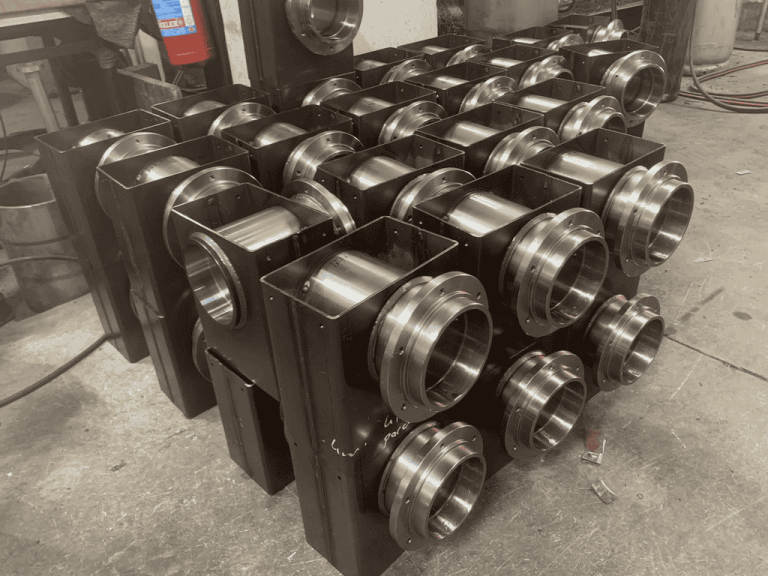
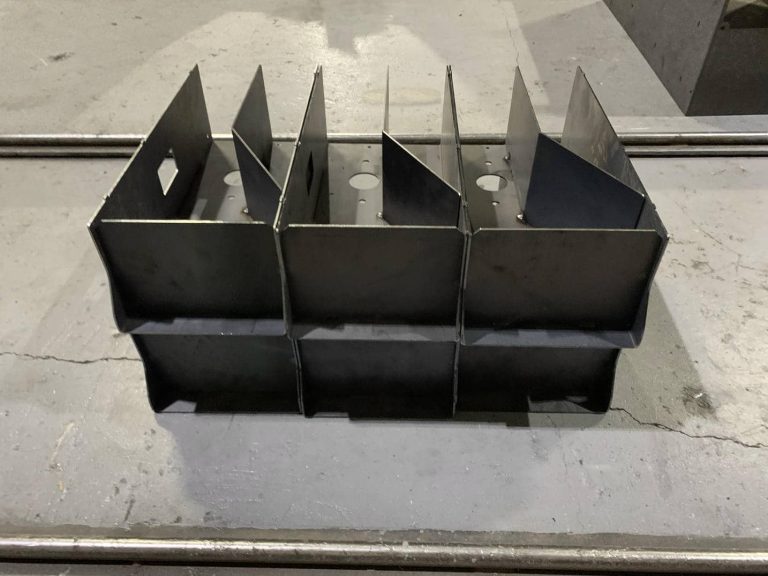
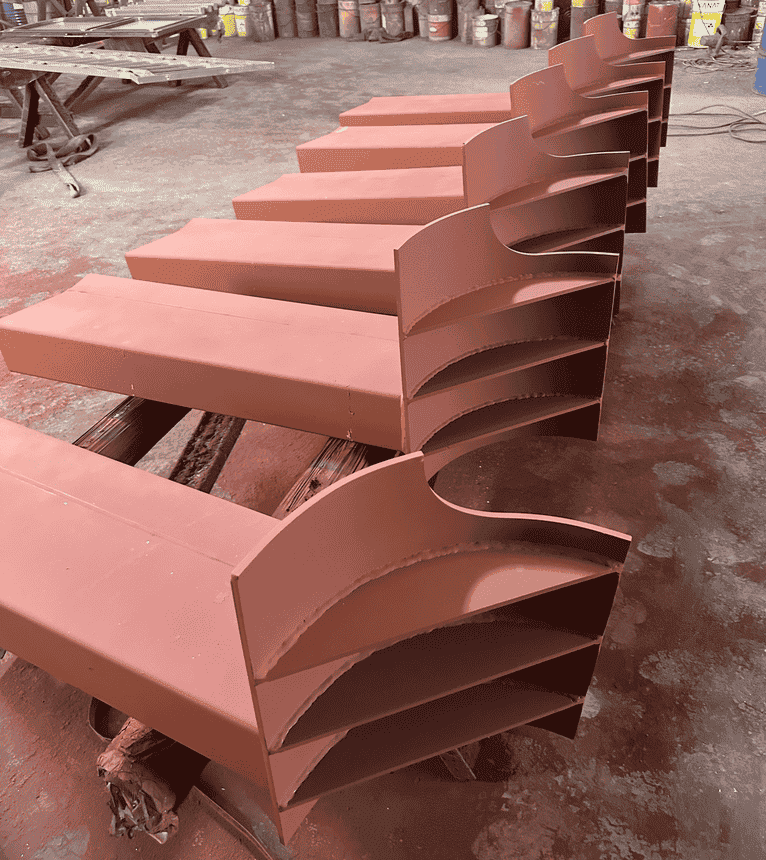
- 304 · 316LCommon grades
- TIG · MIGWelding methods
- PicklingRemoves heat tint
- PassivationRestores the oxide layer
- RaSurface finish
304 vs 316L for Welded Frames
| Property | 1.4301 / 304 | 1.4404 / 316L |
|---|---|---|
| Composition | About 18 % Cr, 8 % Ni | About 17 % Cr, 10 % Ni, 2 % Mo, low carbon |
| Corrosion resistance | Good indoors and in mild environments | Better against chlorides, cleaning agents and pitting |
| Weldability | Very good | Very good; low carbon limits sensitization |
| Typical use | Frames, guards, dry equipment | Wet process areas, water treatment, coastal sites |
| Relative cost | Base | Higher, mainly because of molybdenum |
Why Stainless Frames Cost More Than Carbon Steel
Stainless steel costs several times more per kilogram than carbon steel, but on a welded frame the labour often matters as much as the material:
- Slower welding. TIG welding, often used for visible stainless, is much slower than MIG/MAG on carbon steel.
- Distortion control. Stainless expands more and conducts heat less, so it distorts more and needs careful welding sequences and fixtures.
- Finishing. Heat tint has to be removed, welds may be ground or blended, and the whole part is pickled and passivated.
- Separate handling. Tools, brushes and storage must be kept free of carbon steel to avoid iron contamination.
Specify the finish only where it is needed. A brushed, ground-flush weld on a hidden frame member adds cost without adding value.
Heat Tint, Pickling and Passivation
Heat tint
The coloured oxide next to a weld has less chromium underneath it and is the first place stainless starts to rust. It must be removed on parts exposed to moisture.
Pickling
An acid paste or bath removes the heat tint and the chromium-depleted layer, leaving a uniform matt surface.
Passivation
A controlled treatment (for example to ASTM A967 or similar) restores a clean, continuous chromium oxide layer on the whole surface.
Common Surface Finishes for Stainless Frames
| Finish | Look | Typical use |
|---|---|---|
| Pickled | Uniform matt grey | Industrial and process frames, hidden parts |
| Glass-bead blasted | Even satin matt | Visible frames, hides small marks |
| Brushed (e.g. grain 240) | Directional satin | Food and lab equipment, visible panels |
| Ground welds | Flush, blended seams | Hygienic areas where welds must be cleanable |
State the finish per surface and any Ra requirement on the drawing; specify hygienic finishes only where they are needed.
How to Specify a Stainless Frame
Grade
For example 1.4301 or 1.4404, and whether mixed grades are allowed.
Welding
Continuous or stitch welds, and whether full penetration with gas backing is required.
Weld finish
As welded, pickled, or ground flush, per zone.
Surface finish
Pickled, glass-bead blasted or brushed, with an Ra value if needed.
Documentation
EN 10204 3.1 material certificates, passivation record, dimensional report.
Frequently Asked Questions
Why does a new stainless frame show rust spots?
Usually iron contamination from carbon-steel tools or grinding dust, or heat tint that was not removed. Pickling and passivation fix both.
Is 316L always better than 304?
It is more resistant to chlorides, but for dry or indoor frames 304 is usually enough and costs less.
TIG or MIG for stainless frames?
TIG for thin and visible parts where appearance matters; MIG for heavier frames where speed matters and welds are hidden or ground.
Do all welds need to be ground?
No. Only welds in hygienic or visible areas need grinding. Pickled as-welded seams are fine elsewhere.
Can you combine stainless and machined parts in one order?
Yes. Welded frames and turned or milled stainless parts can be quoted together.
Stainless Fabrication at Nika Steelworks
We build welded 304 and 316L frames, skids, non-pressure tanks and hoppers, and machine the stainless parts that go with them. Stainless is handled with separate tools, welds are pickled and passivated, and parts are packed in film. See our page for stainless frames and equipment parts, welding and CNC machining.
Have a stainless frame to quote?
Send the drawing with grade, finish and quantities. We reply with feasibility, lead time and price.