Welded Machine Frames: Design Choices That Lower the Cost
Most of the cost of a welded machine frame is decided on the drawing. The biggest savings come from standard materials and profiles, fewer and smaller welds, laser-cut parts that locate themselves, tight tolerances only where the function needs them, and machining after welding only on the faces that carry precision. This guide shows where the cost goes and how to design it out.
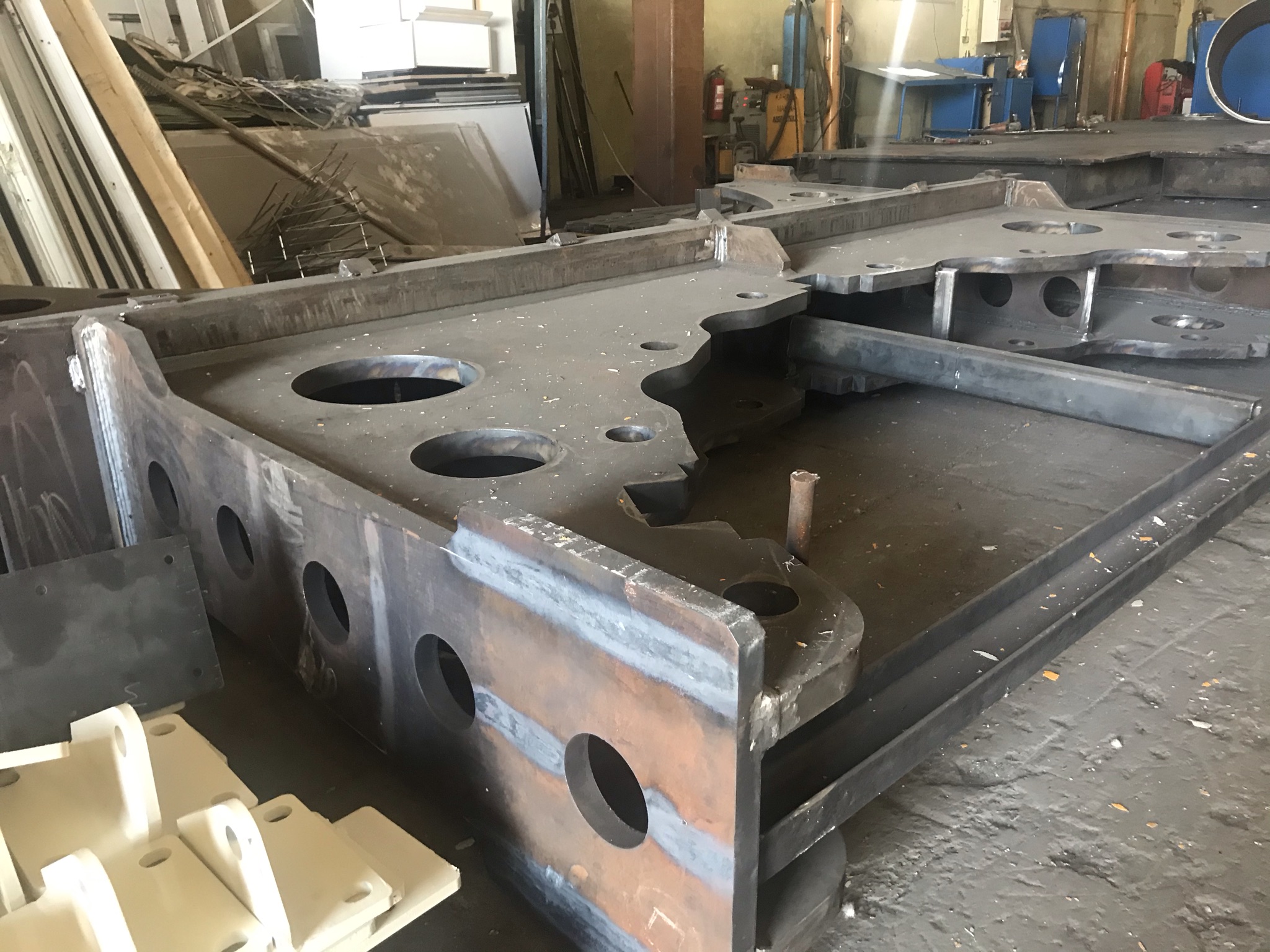
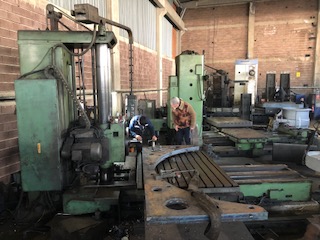
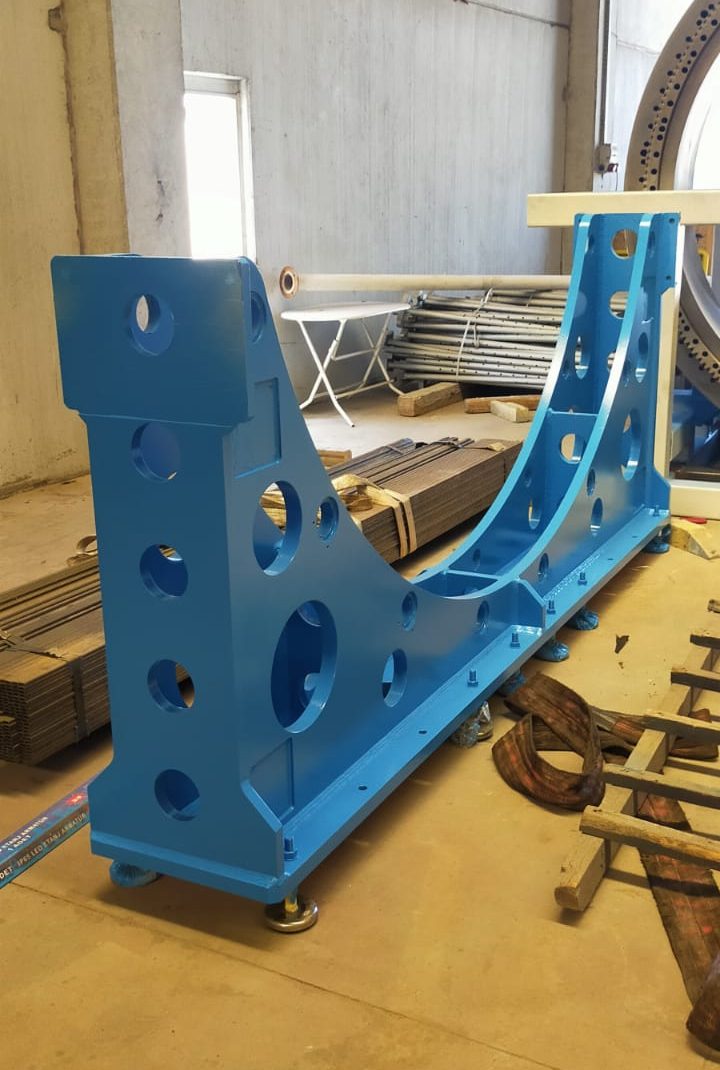
- Weld volumeBiggest labour driver
- ISO 13920Tolerance class B / F
- MachiningOnly functional faces
- Tab & slotSelf-locating parts
- Stress reliefWhen precision matters
What Drives the Price of a Welded Frame
A welded frame or base is priced on material, cutting, fitting, welding, straightening, machining, surface treatment and inspection. Material is usually the smaller share; labour for fitting and welding and the machine time for large-part machining are the larger ones. Every design decision that reduces weld volume, set-ups or machining passes reduces the price directly.
The good news: these savings rarely cost function. They come from simpler joints, better use of laser cutting and clear drawings.
Eight Ways to Design a Cheaper Welded Frame
Use standard materials
S355J2 or S235JR plate and standard profiles (RHS, UPN, HEA/HEB) are available everywhere at short notice. Special grades and unusual thicknesses add cost and lead time.
Replace welds with laser-cut geometry
Tab-and-slot joints, folded plates and laser-cut gussets locate parts without fixtures and reduce fitting time.
Size welds to the load
Weld volume grows with the square of the throat thickness. A full-penetration weld where a fillet weld is enough can multiply welding time and distortion.
Keep welds accessible
Every weld must be reachable with the torch at a good angle. Inaccessible welds mean more turning, re-fixturing and repairs.
Design for symmetric welding
Balanced weld placement reduces distortion and straightening work, especially on long frames.
Machine only functional faces
Mark the faces, bores and hole patterns that need precision, and leave the rest as welded. Give machining stock of typically 3 to 5 mm on those faces.
Define datums
Datums that exist on the welded part and on the machine set-up make large-part machining faster and repeatable.
Ask for stress relief only when needed
Stress-relief annealing before machining helps parts that must stay flat and dimensionally stable, but it adds a process step. Specify it where precision demands it.
Design Decisions and Their Effect on Price
| Decision | Higher cost | Lower cost |
|---|---|---|
| Joint type | Full-penetration welds everywhere | Fillet welds sized to the load |
| Part location | Separate fixtures for every part | Tab-and-slot laser-cut parts |
| Tolerances | One machining tolerance for the whole frame | ISO 13920 class B/F for the weldment, tight tolerances only on machined features |
| Machining | All faces machined | Only functional faces, with clear datums and stock |
| Material | Special grades and thicknesses | S235JR / S355J2 and standard profiles |
| Surface | Multi-coat system everywhere | Coating system matched to the corrosivity class |
Mistakes That Make Frames Expensive
No machining stock
Faces drawn at final size on a welded part leave nothing to machine after distortion, so parts are scrapped or rebuilt.
Sealed hollow sections
Closed tubes without vent holes cannot be hot-dip galvanized safely and trap moisture when painted.
Tight general tolerances
ISO 2768-f applied to a three-metre weldment is not achievable without machining everything.
Drawing Review Before the Quote
At Nika Steelworks we review every drawing for weld access, machining stock, material availability and distortion risk before we quote. If a change would make the frame cheaper or more stable, we list it separately on the quotation, so you can compare like for like.
We cut, weld and machine machine frames, bases and housings to customer drawings, with machining after welding up to 4,500 mm of boring and milling travel. Read more about machining after welding and tolerances for welded parts, or see our manufacturing services.
Frequently Asked Questions
How much machining stock should a welded frame have?
Typically 3 to 5 mm per machined face, more on large or thin-walled frames where distortion is higher. Show the stock on the drawing.
Which steel grade is best for welded machine frames?
S355J2 is the most common choice for strength and weldability; S235JR is fine for lightly loaded frames. Both are widely available.
When is stress-relief annealing needed?
When the frame is machined to tight tolerances and must stay dimensionally stable, for example machine beds and precision bases.
Which tolerance class should I specify for a welded frame?
ISO 13920 class B for linear dimensions and class F for straightness and flatness are common for machine frames, with tighter tolerances only on machined features.
Can a supplier suggest design changes?
Yes. A good fabricator reviews weld access, stock and material and proposes changes before the order.
Have a frame drawing to review?
Send it with quantity and material. We return feasibility, lead time, a price and any suggested cost savings.